Is pho healthy? It can be. A 16 fl oz bowl has about 377 calories and 1,788 mg sodium. Here is how to size your bowl, pick the meat and handle the sauces.
November 15, 2026 · 11 min read
“Is phở actually healthy, or am I undoing my diet every time I order a bowl?”
Is phở healthy? Yes, it can be. By our math from USDA figures, phở with meat runs about 377 calories at 16 fl oz and 755 at 32 fl oz. A 16 fl oz bowl already has 1,788 mg of sodium, so your bowl size is the number to know.
For weight loss: yes, you can keep eating phở. It is neither a fat burner nor a trap. Next time, ask for extra bean sprouts and herbs, fewer noodles, and the sauces on the side.
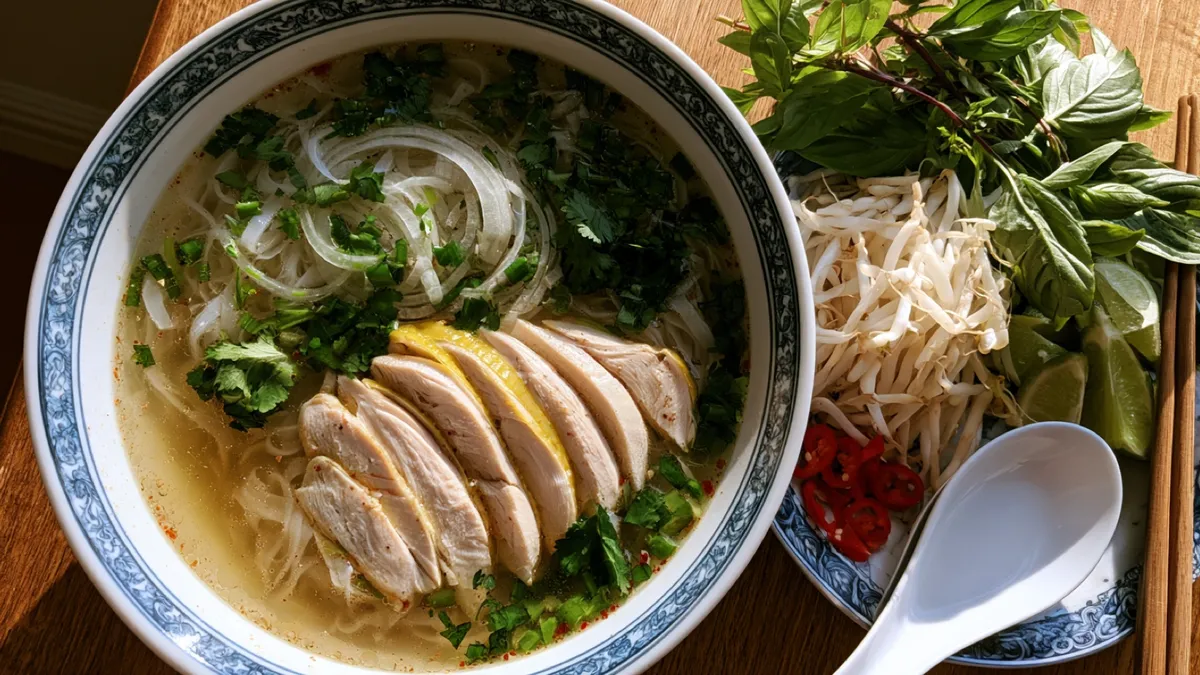
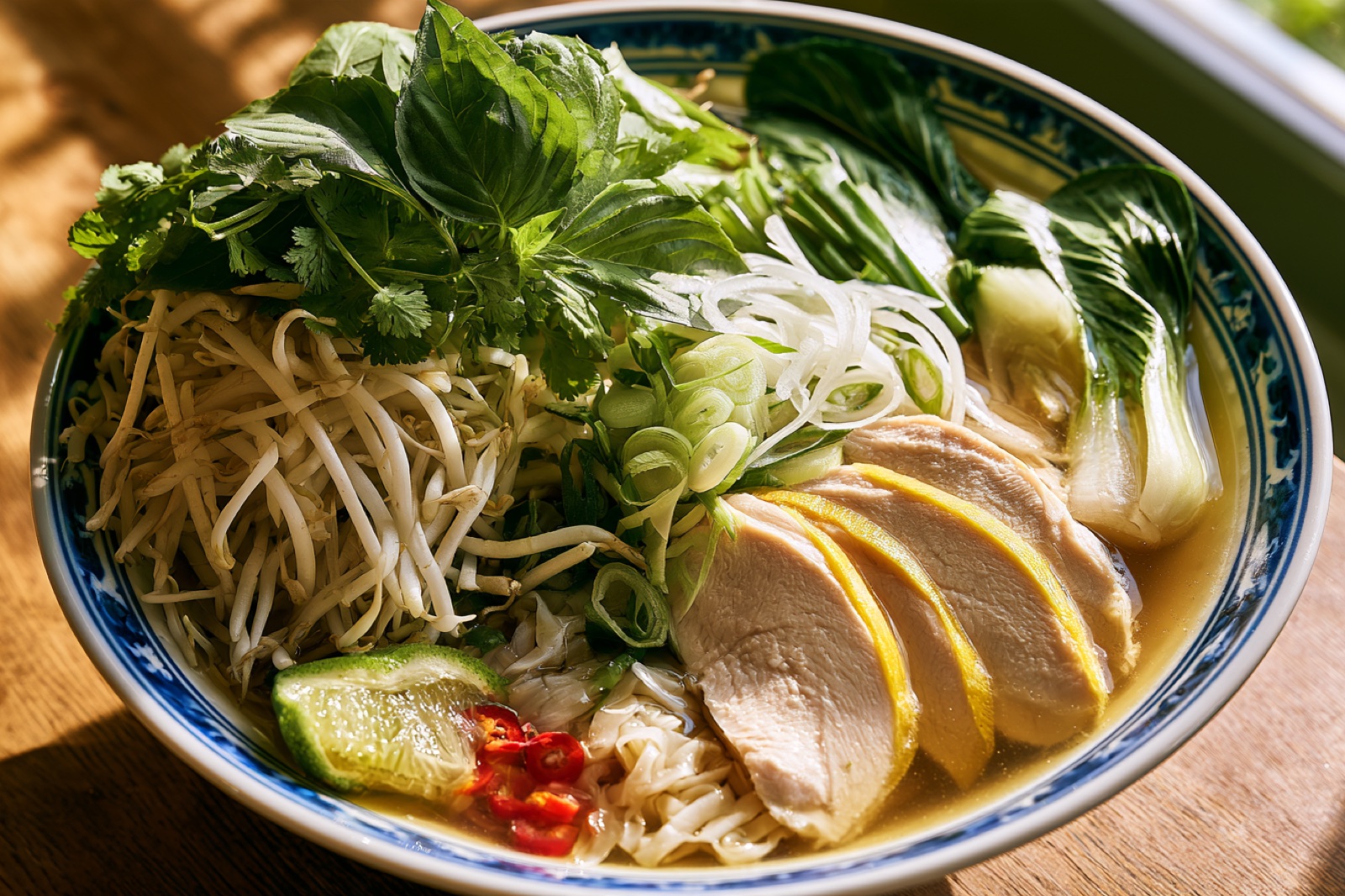
Coach Trần Thủy Tiên’s own phở gà recipe. The percentages are her rule for the bowl and the grams are her amounts, so they match only roughly:
40% vegetables: 150 to 200 g (5 to 7 oz) of bean sprouts, greens and herbs
30% protein: 120 to 150 g (4 to 5 oz) of skinless chicken breast
20% noodles: 80 to 100 g (3 to 3.5 oz) of fresh phở noodles, a portion you can weigh once at home
10% fat: natural fat from the strained broth and a little oil for the aromatics
Source: Tiên’s “Healthy phở gà (40:30:20:10)” recipe on her Facebook page, translated from Vietnamese. Ounces are our conversion.
Quick answer
Phở can fit a healthy day. The size of the bowl, the broth you finish and the sauces you add make it light or heavy.
For weight loss, watch the bowl size and the noodles first. Sodium is the other number: 16 fl oz has about 1,788 mg, and by 24 fl oz you pass the FDA’s 2,300 mg daily value.
Phở can be a healthy meal. How you build the bowl decides it.
From our clients
Hoang Ngoc Thuy finished Young Group’s 6-week program with her waist down 15 cm (about 6 inches). In Tiên’s words, what helped was understanding. She knows Tiên’s three-word rule by heart: protein, vegetables, starch, the same three parts as the bowl above. Over 4 days of Tết (Lunar New Year) eating, her weight did not move. (From Tiên’s Facebook caption, translated from Vietnamese.)
Real Young Group client results, shared with consent. These are individual outcomes, not typical or average results. Results vary by person, and this is not medical advice.
USDA lists phở with meat at 77 calories per 100 g, or about 189 calories in 8 fl oz (245 g). USDA has no separate phở gà entry, so use it for chicken or beef; the meat table below compares the cuts.
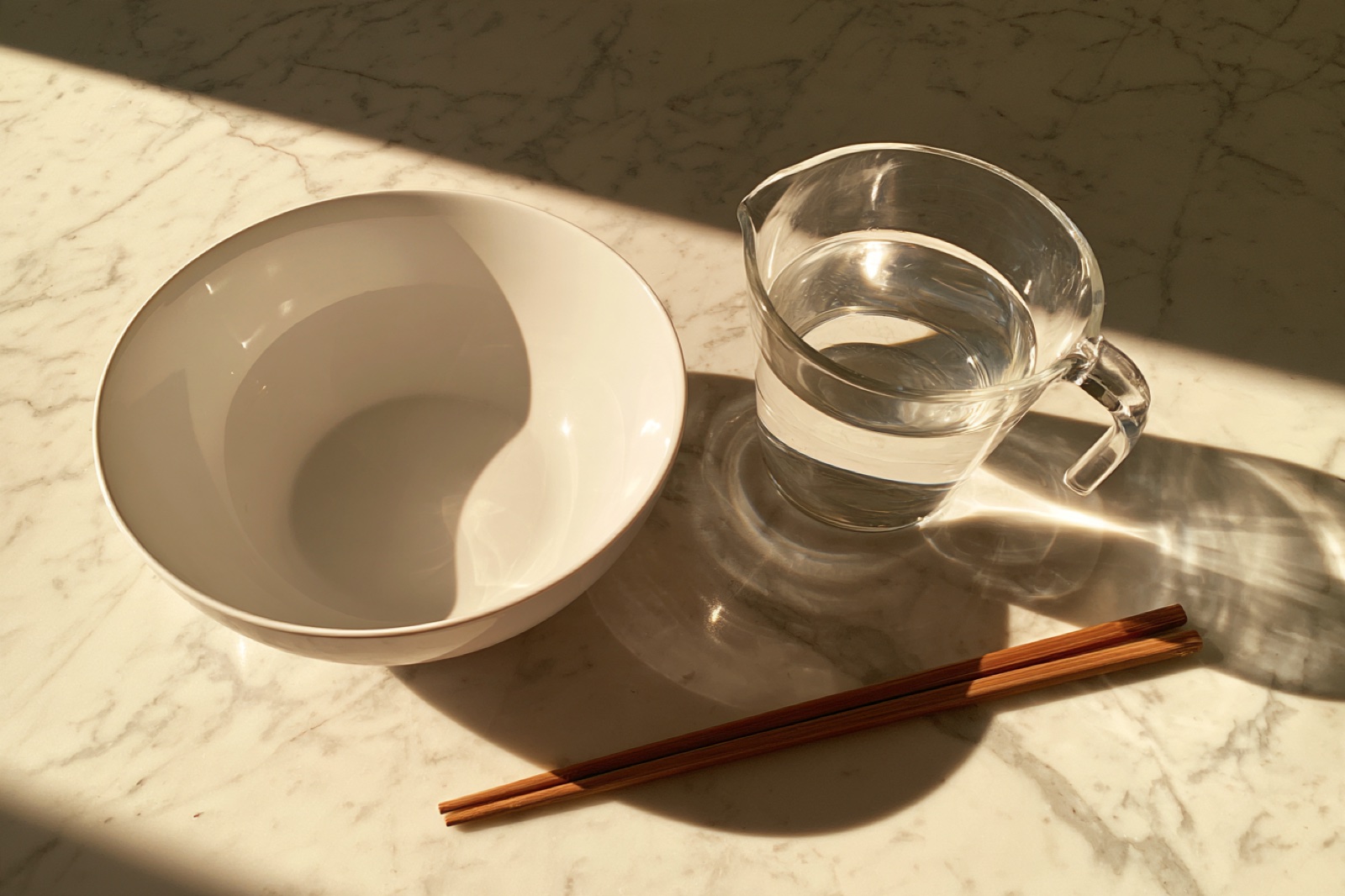
Find your row: restaurant bowls vary, and we found no reliable published size, so measure yours once. Fill your usual bowl with water to where the soup normally reaches, then pour it into a measuring cup. That number is your bowl size. No time to measure? Start with the 16 fl oz row.
Size
Calories
Protein
Sodium
8 fl oz (245 g)
189
14 g
894 mg
16 fl oz (490 g)
377
28 g
1,788 mg
24 fl oz (735 g)
566
43 g
2,682 mg
32 fl oz (980 g)
755
57 g
3,576 mg
No meat (closest to vegetable phở), 8 fl oz
91
3.5 g
875 mg
Source: USDA FoodData Central, soup, phở, with meat and soup, phở, no meat (survey foods, 245 g per 8 fl oz serving). Rows for 16 to 32 fl oz are our multiplication of that serving. USDA’s entries are average recipes, so a restaurant bowl will differ: use the table as a rough guide.
Fill your usual bowl with water, then pour it into a measuring cup.
Is the broth the problem? How much sodium is in phở?
Sodium is where a big bowl adds up fastest. The FDA says “the Daily Value for sodium is less than 2,300 milligrams (mg) per day,” and that Americans eat about 3,400 mg a day on average. WHO recommends less than 2,000 mg a day for adults. Why it matters: the FDA says diets higher in sodium “are associated with an increased risk of developing high blood pressure.”
Just 8 fl oz of phở is already 894 mg, about 39% of the 2,300 mg daily value. Here is where it sits:
Tip: do not take out the protein. Dropping the meat barely changes the sodium (see the no-meat row in the calorie table), and it takes away the protein. Your body needs protein to repair cells and make new ones (MedlinePlus), muscle among them (Harvard T.H. Chan).
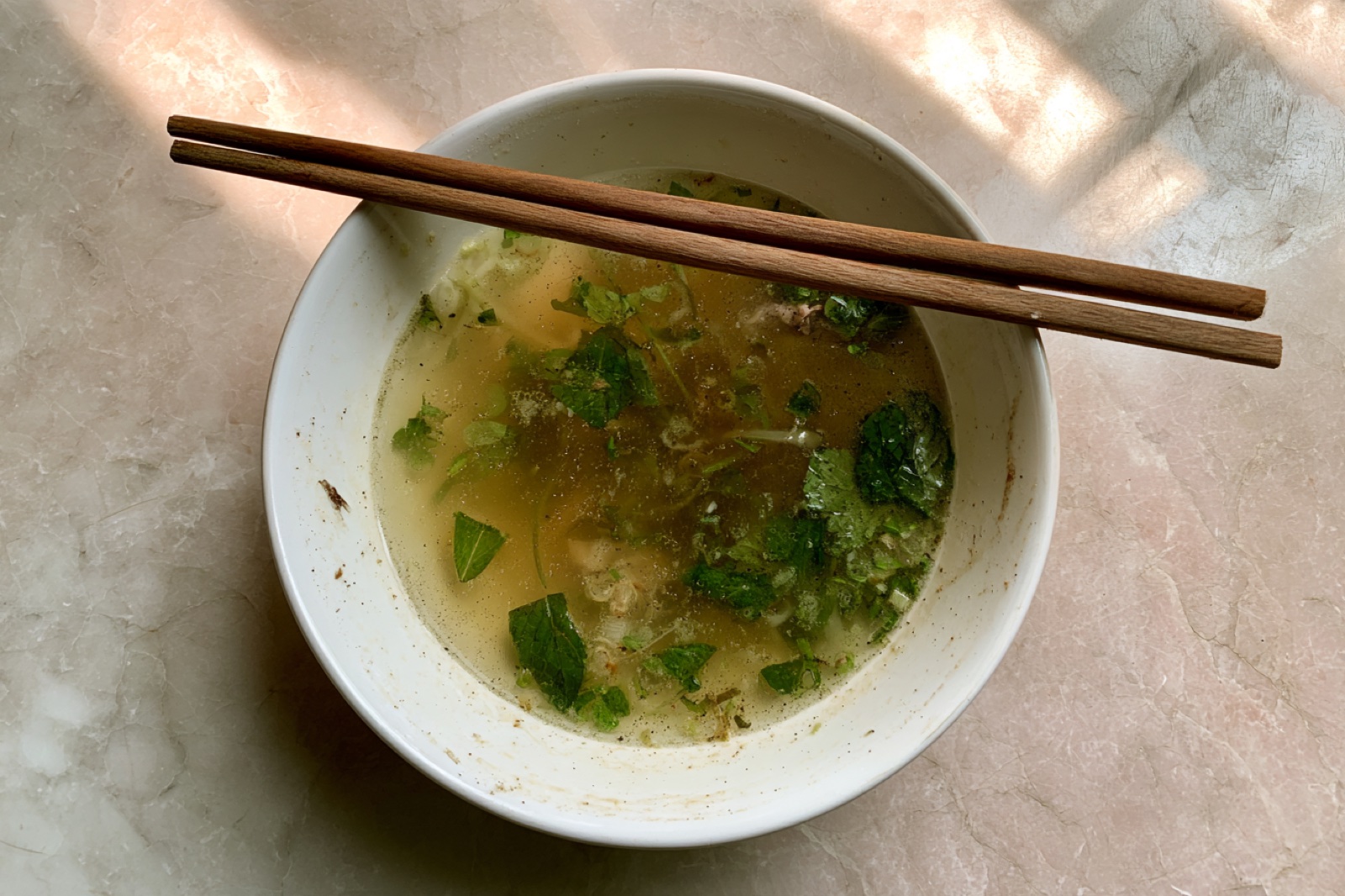
Watching sodium? Leave some broth in the bowl, or cook at home, where you control the salt. USDA’s figure covers the whole soup, so we cannot say exactly how much leaving broth saves.
Many pages say phở broth’s collagen helps your joints or gut. We found no study on phở broth itself, so we leave that claim out. What a bowl does give: 8 fl oz of phở with meat has about 14 g of protein, 1.4 mg of iron and 1.2 mcg of vitamin B12 (USDA).
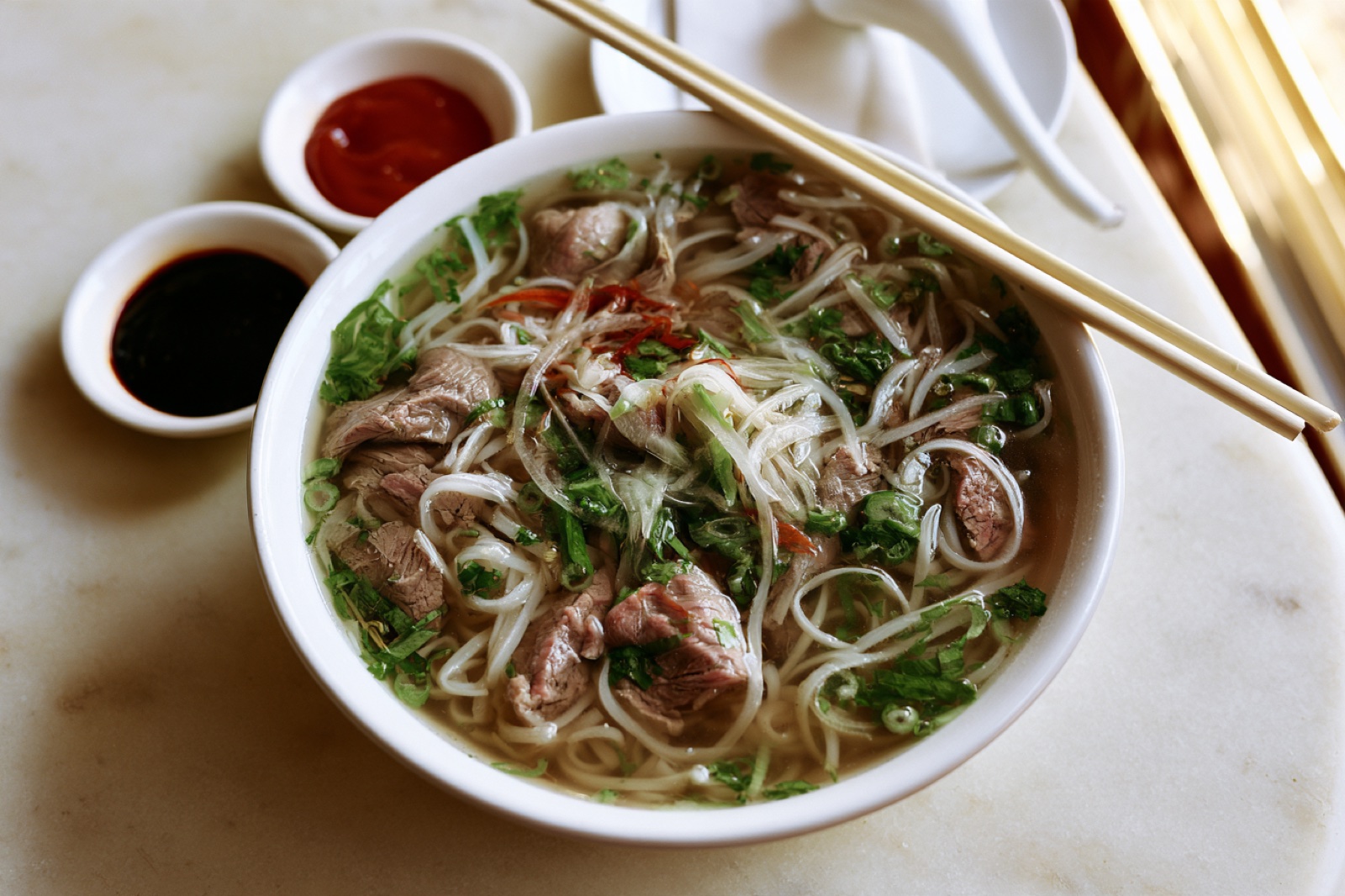
Noodles and meat finished, some broth left in the bowl.
The broth is one choice you make. The meat on top is the next.
Two spoons of hoisin and a teaspoon of sriracha add about 656 mg of sodium, on top of the broth. Put a little in a side dish and dip your meat instead of pouring it in. For flavor, use lime, chili slices, herbs and bean sprouts (30 calories per 100 g, USDA).
Is phở good for weight loss? How to order it
A bowl built vegetables first: greens, chicken, then noodles.
At a restaurant, four requests do most of the work:
At the restaurant
What to do
1. Vegetables first
Ask for extra bean sprouts and herbs. They fill the bowl for few calories.
2. Pick the leaner meat
Chicken breast or lean beef over fatty brisket. Ask which cut is in the bowl.
3. Fewer noodles
Say “less noodles, please,” or order the small bowl. Eat the vegetables and meat first.
4. Sauces on the side, some broth left
Dip, do not pour. Leave some broth.
Cooking at home? Use Tiên’s amounts at the top of this post: weigh the noodles once, then fill the rest of the bowl with vegetables and chicken.
Eating phở but not losing weight?
Do not blame the phở yet. One bowl is one meal, and your total for the day is what counts.
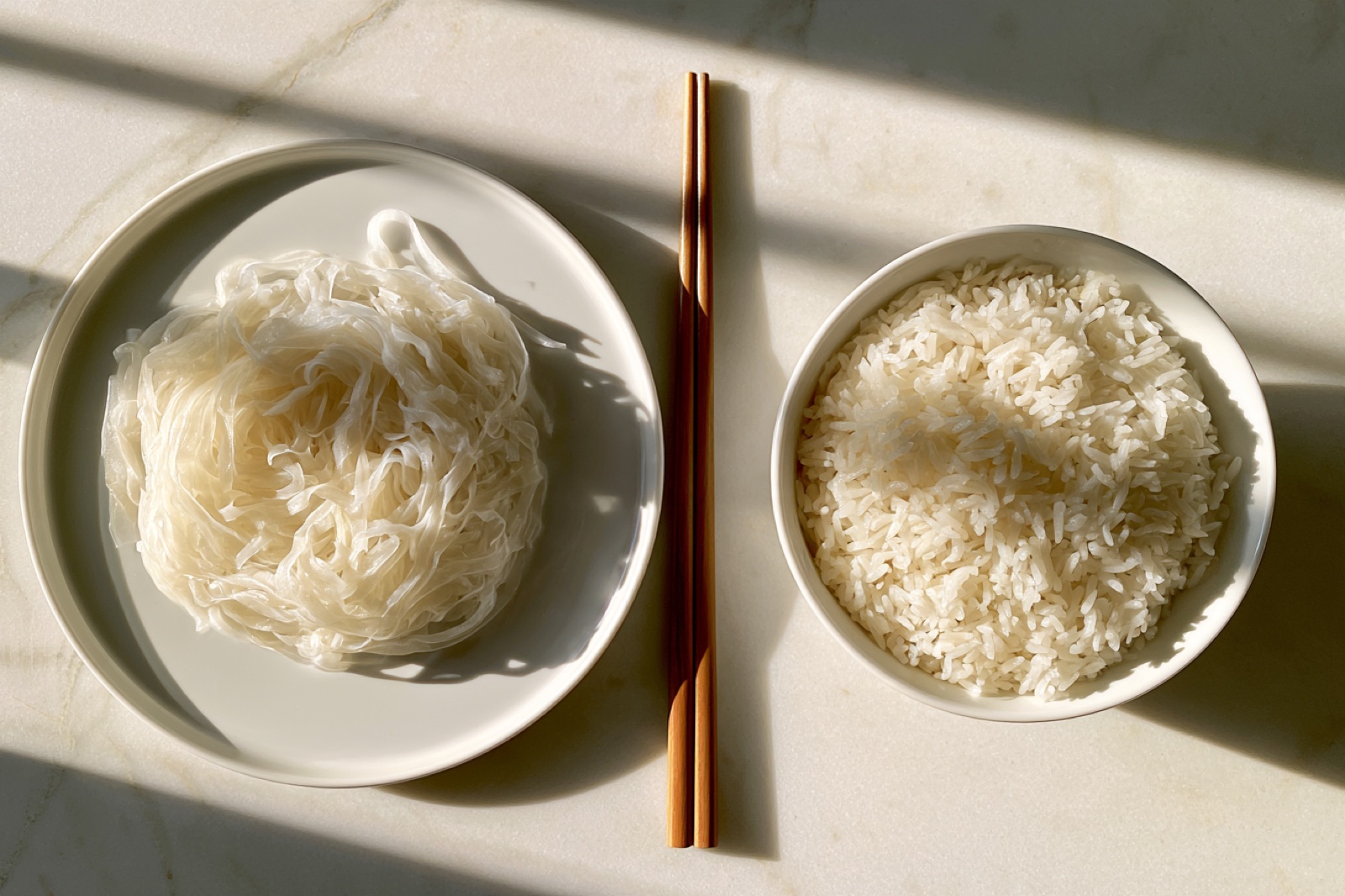
Cut rice but the scale is stuck? Rice noodles are a starch like rice, so swapping one for the other changes little. The next step is to see your whole day.
Write down one normal day. Rice at dinner, snacks, a sweet coffee or tea: put it all on one list before you change the bowl.
Count the drink with your phở. A sweet drink is part of the meal, not a side.
Give it a few weeks. If the scale still has not moved after a few weeks, look at your whole week, not just one dish.
Cook a weekend pot? Make the broth as you always do, then build your own bowl with Tiên’s amounts at the top. The family can add more noodles to theirs.
Phở is healthy when you build the bowl
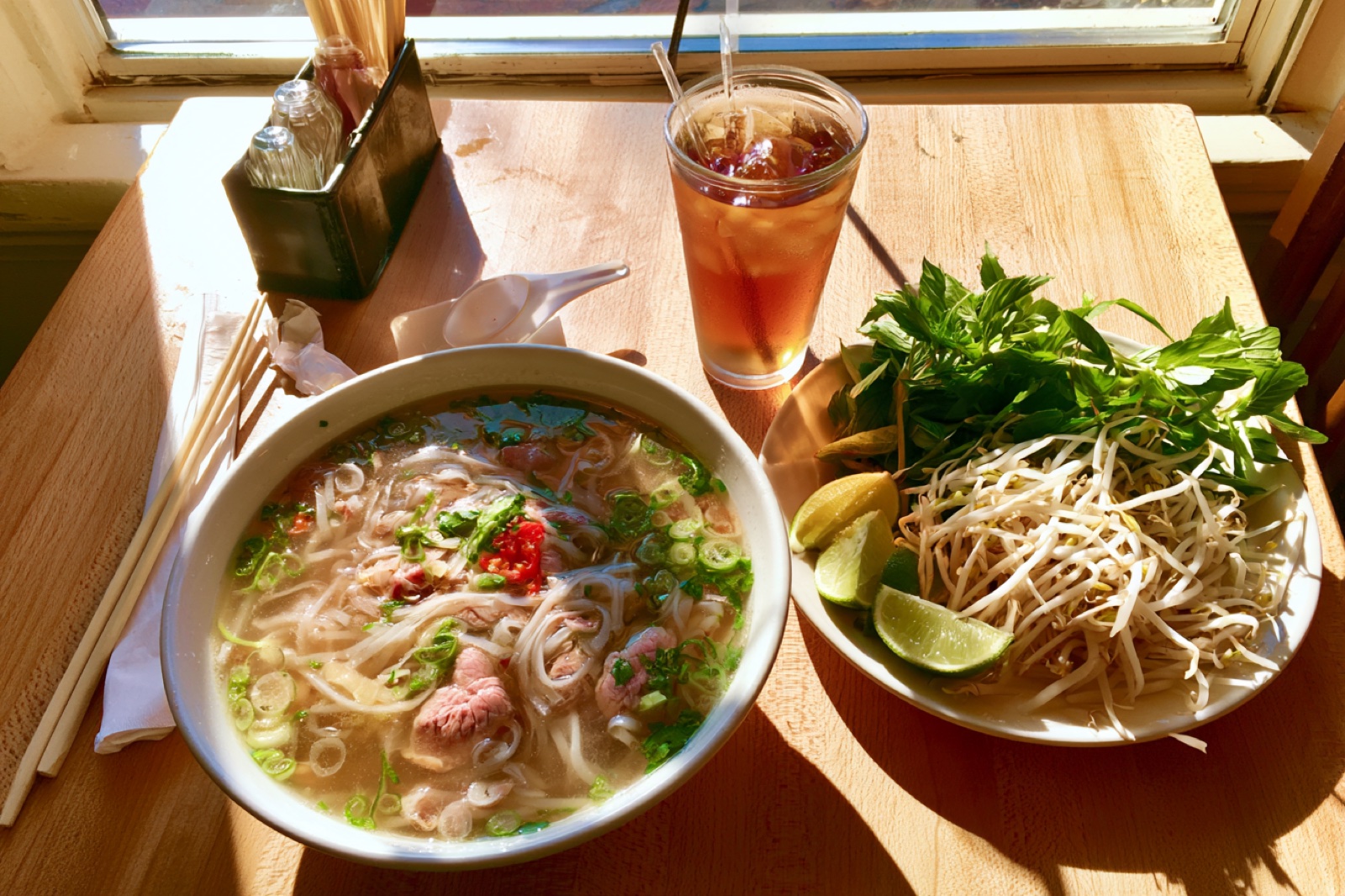
Phở at a restaurant, herbs and bean sprouts on the side.
If you remember one thing from this post, make it this:
Phở can be a healthy meal. How you build the bowl decides it.
Want to lose weight without giving up phở, rice or family dinners? Young Group offers 1-on-1 coaching in English and Vietnamese, built around the food you already eat. Book a free consult.
The free consult takes about 15 minutes, on Messenger, Zalo or by phone. We learn about your body and situation, then suggest a few ways to start. No obligation to sign up. You also get a free seat in one of Tiên’s Zoom sessions (she runs two a week).
This is general information, not medical advice. Talk to your doctor about your own numbers, especially about sodium.
Frequently asked questions
How many calories are in vegetable pho?
USDA’s closest entry, phở with no meat, has about 91 calories per 8 fl oz, roughly half the meat version, with almost the same sodium (875 mg against 894 mg). A 16 fl oz bowl is about 182 calories, our multiplication of the 91. It is the last row of the calorie table above.
What is the healthiest pho to eat?
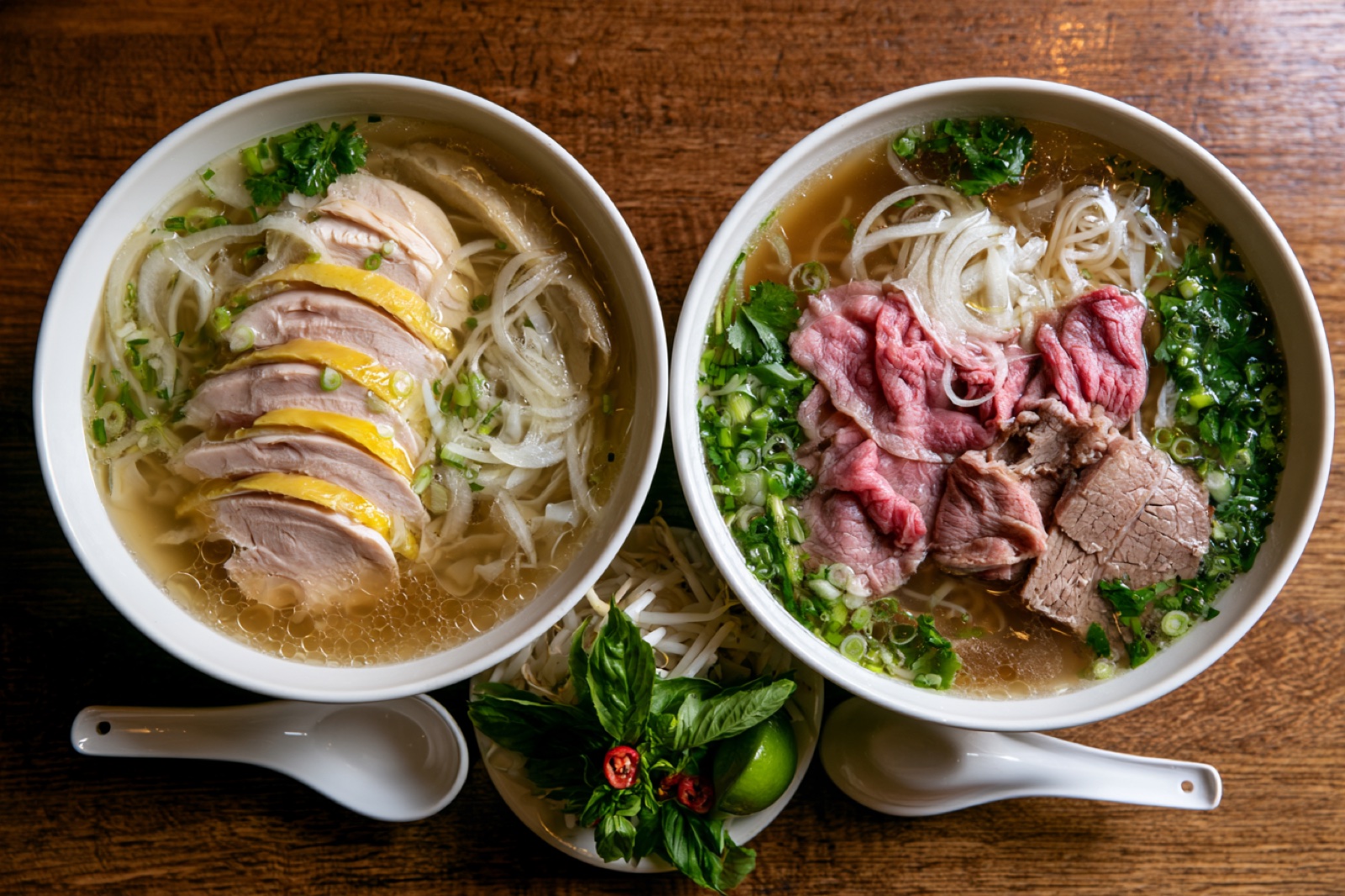
Pick phở gà with chicken breast or phở bò with a lean cut, a smaller portion of noodles, extra bean sprouts and herbs, and the sauces on the side. A fattier cut like brisket roughly doubles the calories from the meat (see the meat table above).
Can you eat pho every day?
You can, if the rest of your day leaves room for the sodium: a 24 fl oz bowl is already past the FDA’s daily value. Keep the bowl smaller, leave some broth, and keep your other meals lower in salt. If a doctor limits your sodium, ask them first.
Is the MSG in pho bad for you?
The FDA considers MSG added to food “generally recognized as safe.” Some people report headaches after eating it, but in studies with people who call themselves sensitive, scientists could not consistently trigger reactions (FDA). If you feel unwell after a bowl, ask the restaurant whether it uses MSG.
Is pho good for a cold or sinuses?
We have not found a reliable study showing that phở treats a cold or clears sinuses, so we will not claim it. A warm bowl can be a fine meal when you feel run down. Count it like any other phở, sodium included, and see a doctor if you stay unwell.
Written by
Trần Thủy Tiên
Founder of Young Group and author of Béo Ơi Vĩnh Biệt. She built the 1-on-1 coaching method the team uses, personally selects and trains every coach, and coaches clients in the US, Australia, Canada, Germany, the UK and Vietnam.